
What to tell Santa about your child (and what to keep to yourself)
The five details that make a personalized Santa letter land, the ones that fall flat, and the ones you should never put in writing.
By the North Pole Bureau · September 2, 2026
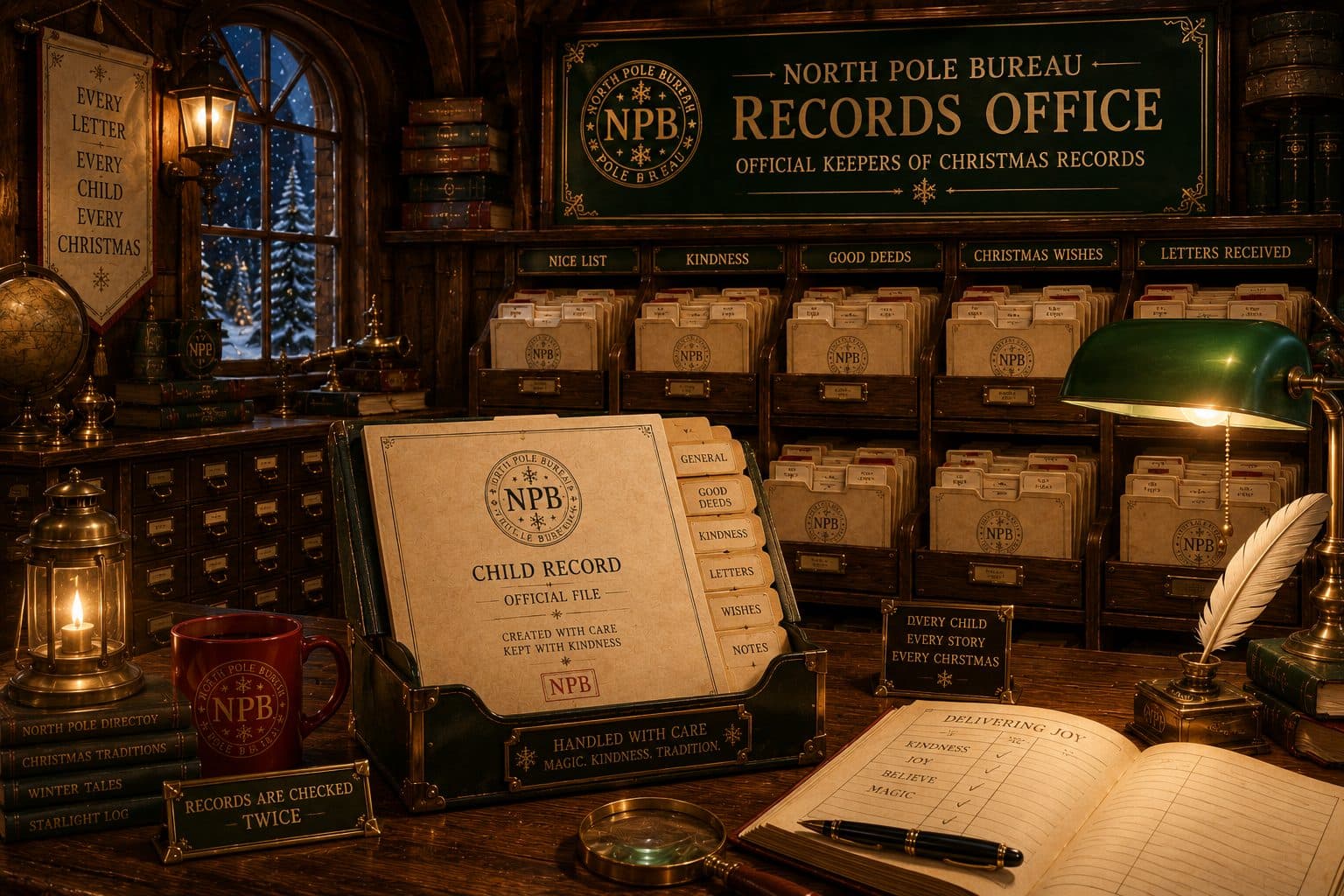
The Bureau’s letter form asks about a dozen things and needs only two. This is the list, in order of how much each one does, with the reasons. Use it for our letter or for one you write yourself.
1. Something they achieved this year
This is the line a child reads twice. Riding a bike. Swimming without a float. Reading a chapter book alone. Sleeping in their own bed. It does not have to be big to them; it has to be true. Santa noticing effort lands harder than Santa noticing behavior.
2. A kind thing they did
Sharing crayons with a new girl at school. Helping a brother find a mitten. Feeding the neighbor’s cat. One sentence is plenty, and it is the sentence that makes a parent tear up at the kitchen table.
3. What they love doing
Drawing, forts, dinosaurs, the trampoline. This gives Santa something to be curious about, which is more magical than something to praise.
4. The people and pets by name
A sibling, a best friend, the dog. First names only, spelled the way the child would spell them. Two or three names is the sweet spot. Beyond that the letter starts to sound like a roll call.
5. A family tradition
Carrots on the porch. Gingerbread on Christmas Eve. Pajamas on the twenty-third. Santa mentioning the tradition tells the child he has been to the house, which is the whole point.
What falls flat
- The whole wish list. One hoped-for thing, mentioned carefully, works. Five reads like a receipt.
- Behavior warnings. "I hear you have been fighting with your sister" is a lecture with a stamp on it.
- Generic praise. "You have been very good" could be about any child. Cut it and put in a fact.
What never goes in writing
A street address. A school. A birthday. A photo. A last name. None of these make the letter better, and a letter is a piece of paper that travels. The Bureau’s form does not have fields for them on purpose, and our privacy policy says what we do with the rest.
How the details become a letter
With the Bureau, the details you give are all the letter is allowed to use. A check runs on every draft and throws out any that mention something you did not say. Then you read it before you pay, and you can ask for it warmer, funnier or shorter. Two details in, one page out, and every word yours to approve. The writing guide has the rest.
Questions this guide answers
What should I tell Santa about my child for a personalized letter?
In order of how much each one does: something they achieved this year, a kind thing they did, what they love doing, the people and pets by first name, and a family tradition. Two details are enough for a letter that sounds like Santa knows them.
What details fall flat in a letter from Santa?
The whole wish list, which reads like a receipt. Behavior warnings, which are a lecture with a stamp on it. And generic praise such as you have been very good, which could be about any child.
What should never go in a letter from Santa?
A street address, a school, a birthday, a photo or a last name. None of them make the letter better, and a letter is a piece of paper that travels. The Bureau's form has no fields for them on purpose.
How does the North Pole Bureau turn the details into a letter?
The details you give are all the letter is allowed to use. A check runs on every draft and throws out any that mention something you did not say. You read the whole letter before you pay and can ask for it warmer, funnier or shorter.